Suzuki Teaching – Jenny Macmillan
Part 3 – Why Train as a Suzuki Teacher?
The most enjoyable aspect for me of teaching through the Suzuki approach is the exciting results achieved by 100% of one’s pupils, not just the few “talented” ones. By “exciting”, I don’t necessarily mean fast progress. Every child is different. All children have their own quirks. Some find it easy to improvise at the piano; some love to learn new pieces; others find learning new notes difficult but love to polish and play beautifully their old repertoire; some enjoy sight-reading – finding out what is the story behind the notes, like reading a book; others love listening to music but find it difficult to get their fingers to work independently. I have one pupil who is visually impaired; I’ve had others with dyslexia,
dyspraxia or autism. There is huge joy in helping them play the best they can. And that best, when
carefully taught, is impressive.
There is the joy of getting to know our Suzuki families – teacher, pupil and parent work closely together.
There is the pleasure of forming long-term friendships – I’m still in touch with many of my pupils
who had lessons with me 20 or even 30 years ago, and a number of my Suzuki families are still in close touch with each other. There is the delight of building a musical community amongst my current families – they meet regularly in my studio and at pupils’ concerts, but also outside my studio. There is the joy of
getting to know the children as individuals and helping them build their strengths and overcome their weaknesses – whether it be boosting their confidence, helping with rhythmic difficulties, or gently encouraging them to push themselves to master the next piece. And, of course, there’s the
personal satisfaction of seeing many pupils move on to the junior department of a music college or a local distinguished teacher, knowing they have an absolutely solid musical and technical foundation.
Another delight of Suzuki teaching is that one can get away from teaching to the exam. We teach
each child in the way, and at the pace, that suits them best. Children’s (especially boys’) eyes are not fully developed for reading until around the age of seven; so before then we do teach reading
skills (singing, clapping rhythms, using flash cards, and so on) but save reading repertoire from the
score until children are ready for it – in the same way young children can fluently speak difficult
words which they won’t be able to read until they are a little older. We do teach scales and arpeggios,
but in a musical way, round the circle of 5ths, and staying hands separate for much longer than would
be possible if an exam were looming. We certainly teach listening and aural skills during each piano
lesson in an enjoyable way, and with games in small musicianship group lessons rather than to
the graded exam requirements. There is a core Suzuki repertoire for each
instrument. For piano, there are seven books, leading from folk songs, through minuets and
sonatinas to a Chopin Nocturne, Bartók Romanian Folk Dances and Bach Italian Concerto. A crucial
benefit is that teachers know each piece thoroughly and intimately in the same way that a carpenter
knows each of their tools very well. Suzuki teachers know the repertoire in depth so we can focus on the
requirements of the child, not the piece. We always work on tone – listening carefully to beautiful and
varied tone, working on the technique required for each type of sound. We often need to work
on balance and voicing. Some children will have difficulties with rhythm, others with fingering,
others with remembering to play repeats. Each skill is learned thoroughly. Skills studied in a simple
way in one piece will be developed later in the repertoire in a more complicated piece.
In addition to the core repertoire, teachers add supplementary repertoire of their own choosing.
For instance, my summer concert is always an ensemble concert – children learn duets and trios,
or play pieces for eight hands at two pianos; or older children play second piano accompaniments
to younger children’s early Suzuki repertoire pieces. Children enjoy playing together – and their parents
love seeing and hearing it. Two children can play a piece in unison in overlapping lessons. And, if many
keyboards are available, several children can play their repertoire together in the same way orchestral
violinists or cellists play in unison in their section, or singers in a choir. The social aspect of making
music together greatly motivates children to practise, bearing in mind that ensemble playing
encourages co-operation and not competition. Each child wants to do as well as possible so as not to let down their partners, rather than wanting to play “better” than their partners.
A parent’s view
Parents soon learn that completing a Suzuki book (and giving a book recital, followed by a tea party)
is as prestigious as taking an exam – and much more enjoyable and satisfying. Here is a comment
from the mother of two of my pupils: “When I first thought of music for my children I wanted them
to take exams. As I discovered fairly early on, Suzuki teachers tend not to teach exams. But I’m
not disappointed. What we get is, in my view, even better. My children are learning to play, understand
and appreciate music – in the whole sense of each of those words. Every day, following clear, simple
instructions, taking small, manageable steps, they hone their skills. I think the school my children
go to is a super school, but I strongly suspect Suzuki piano will shape their social, emotional and
academic development as much, if not more.” All parents want the best for their children. And
here is an opportunity for them to become involved in their children’s musical development – by
creating a positive nurturing environment in which their child’s musical skills can develop. The way
in which children are taught develops life skills of concentration, memory, self-discipline and cooperation. One new parent observed lessons in my studio and commented, unprompted, “But you are
teaching the whole child!”.
Teacher training
On a Suzuki teacher training course, trainees have individual lessons to learn the repertoire
and assimilate both the technical and musical techniques required, study teaching points in each
piece and how to teach these, receive feedback on teaching children and each other, consider parent
education, and discuss the nurturing and supportive philosophy that underpins the approach. One of my new trainees said that, as a child, she always felt she needed the score in front of her; and
on the training course, she appreciates learning to play from memory, starting with simple pieces. She
has also commented on how she is now learning about the effective use of her body when playing,
enabling her to feel more comfortable at the piano, and to make more beautiful and varied sounds.
It takes time to train as a Suzuki teacher – though one can (and should) teach children while training.
And there is a cost involved. But, as the BSMA survey of hourly rates shows, Suzuki teachers are
able to charge a premium. Once you’re known, there will be no shortage of Suzuki pupils!
Ideally, teachers have two pianos – one for the teacher and one for the pupil. However, one piano
and one good keyboard is fine if a lack of space or finance precludes two pianos.
The joy of being a Suzuki teacher is that it is not just a job. There is the satisfaction of being trained
to do something well and successfully, and the pleasure of supporting the whole Suzuki family. As
with everything in life, the more one puts in, the more one gets out. We teach children the piano
in order to develop children’s potential to the fullest extent. We are helping children establish
essential life skills through the study of music. We are generating a love of music in each child and,
through that, a desire to make their own music.
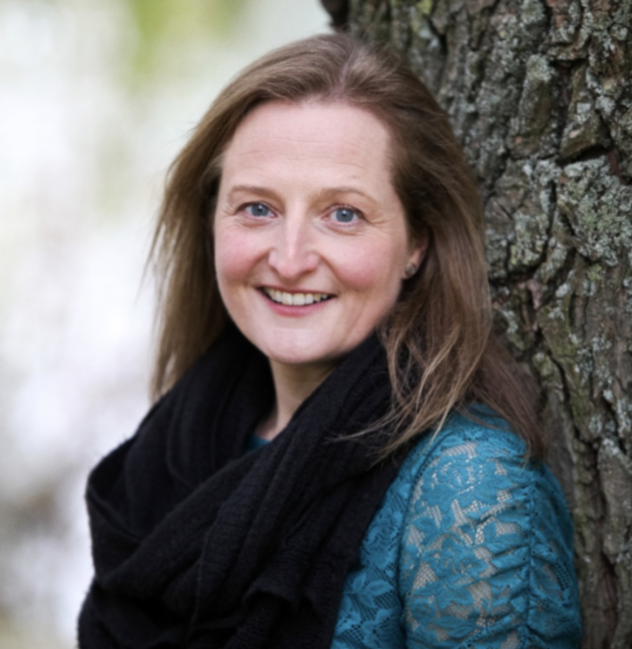
Jenny Macmillan runs a thriving Suzuki piano teacher training course online and in Cambridge.
Cambridge Suzuki Training involves online training monthly on Sundays, and a week at Easter and a week in the summer in Cambridge (but is flexible if trainees prefer to spread out their training over a longer period): www.jennymacmillan.co.uk. For other Suzuki teacher training courses, look on the website of the European Suzuki Association: www.europeansuzuki.org
Article written by Jenny Macmillan. This article was featured in Piano Professional.